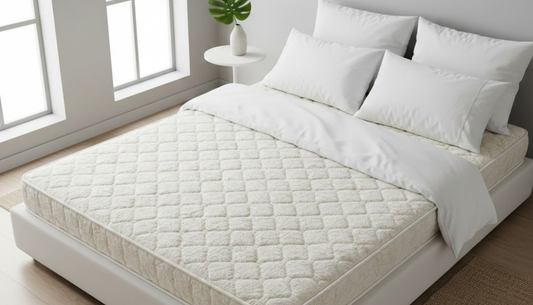
How does memory foam in mattresses actually help with joint pressure?
When joints ache, sleep can feel like a long shift instead of a reset. Arthritis affects roughly one-third of U.S. adults. A sagging bed can add to inflammation, stiffness, and limited mobility. That's why many shoppers see memory foam mattresses as a practical tool for joint pressure relief, not a luxury.
Sleep data tells the same story from another angle. In Sleep Foundation profiles totaling about 160,000 responses, roughly a quarter of people say they feel pain “often” or “always.” Most report that pain disrupts sleep. Trouble falling asleep, waking up often, and short nights can turn mild soreness into a rough morning.

So what do memory foam mattress benefits look like in real life? Quality foam responds to body heat and weight. It then gently contours to the shoulders, hips, and knees. This contouring helps spread load across a wider surface, which can lower pressure buildup that triggers sharp spots and next-day stiffness.
This guide will break down what to look for in the best memory foam mattress. We'll cover firmness, sleeping position, spinal alignment, and temperature control. We'll also cover motion isolation, durability, and shopping essentials like sleep trials and warranties. This way, you can find a top pressure-relieving mattress with fewer surprises.
Understanding joint pressure during sleep and why it gets worse overnight
Joint pain can seem louder at night because the body is stationary for long periods. This causes more body weight to concentrate on specific areas, like hips, shoulders, and knees. So, how well a sleep surface distributes weight is key, not just its softness.

Pressure points are areas where force accumulates most. On old innerspring or uneven foam, these points can press into sensitive tissue and irritate inflamed joints. Bedding designed to reduce these points aims to support more of the body at once.
Spine alignment is also important. The back acts like a chain. If the mattress lets the hips sink too far or doesn't support the waist, the spine can twist or bow. This can increase stress on nearby joints, making mornings stiff, even if arthritis hasn't worsened.
There's a sleep–inflammation cycle that can keep pain going. Poor sleep is linked with higher inflammatory markers like C-reactive protein and interleukin-6, which increase sensitivity. More pain can then disrupt sleep again, creating a cycle.
- Rheumatoid arthritis is autoimmune and may flare with inflammation, making nighttime aches feel unpredictable.
- Osteoarthritis involves cartilage breakdown and can feel worse when habits and support are off over time.
Durable bedding solutions help by keeping support consistent night after night. When materials hold their shape, the body is less likely to “bottom out,” and pressure tends to stay more evenly managed as the night goes on.
How memory foam works to reduce pressure points and cradle sensitive joints
When joints hurt at night, it's often because of too much pressure on a small area. Memory foam mattresses adjust to heat and weight. They soften where needed while supporting the rest of your body.
This "sink and support" feeling is key for those seeking joint relief. It helps in reducing pressure on sensitive areas.


Body contouring and even weight distribution to lower peak pressure
The best bedding doesn't just feel soft; it spreads your weight evenly. High-quality foam lets your shoulders, hips, and knees settle comfortably without sharp pain.
Many experts recommend medical-grade memory foam with a density of 4–5 lb/ft³. This type is often certified by CertiPUR-US. It's shown to reduce peak pressure by 67% compared to regular mattresses.
- Conforming reduces point loads on sensitive joints.
- Even distribution lowers peak pressure that can trigger aches.
- Stable support helps the spine stay neutral instead of sagging.
Why pressure point buildup often hits shoulders, hips, and knees
Pressure tends to spike where the body is bony or bears more weight. For side sleepers, the shoulder and hip take the brunt. Cushioning must be deep enough to prevent pinching while keeping alignment.
Knees often get pulled into the problem through mechanics. If the hips sink unevenly or the legs stack without support, the knee joint can twist and load in ways that don’t feel great by morning. Many memory foam mattresses aim to support the head, neck, shoulders, back, and hips while keeping close to the body. This directly ties to joint relief and the benefits people notice daily.
Motion isolation benefits for people who wake up and reposition due to pain
Pain can make sleepers shift often, and that movement can create another cycle of wake-ups. Foam is known for motion isolation because it absorbs energy instead of bouncing it across the bed.
This matters if you’re changing positions to manage stiffness. It also helps a partner sleep through those adjustments. In practice, pressure-relieving bedding with a true memory foam comfort layer can make repositioning feel less disruptive. Memory foam mattresses keep the surface quieter and more settled.
Memory foam mattresses, Pressure-relieving bedding, Long durability mattress
Joint pain at night can be tough. Memory foam mattresses help by cushioning bony areas. They aim to provide a steady, calm sleep surface.
What “pressure-relieving bedding” means in real-world sleep comfort
Pressure-relieving bedding is more than just soft. It molds to your body, absorbing weight evenly. This prevents pressure buildup at shoulders and hips.
Day-to-day, this comfort comes from even support and weight distribution. Materials like foam and latex cradle joints, reducing stress.
Why high-density foam layers matter for support and long-term performance
The support core is key in foam mattresses. High-density foam layers keep the mattress stable. This ensures your spine and joints stay aligned.
High-density memory foam balances contouring with structure. This mix supports long-lasting pressure relief, keeping the mattress feeling great over time.
How a long durability mattress helps prevent impressions that can aggravate joints
A cheap bed might feel good at first but can sag over time. These dips can disrupt your posture and cause pressure points.
A Long durability mattress uses strong materials and tight construction. This prevents sagging, ensuring joints stay comfortable and aligned.
Finding the right firmness for joint pressure relief and spine alignment
Firmness is key when your joints are sore. You want a balance that keeps your spine straight and softens any pressure points. This balance makes your mattress feel like a supportive cradle, which is great for your joints.
Why medium-firm is often recommended for back and joint pain
Firmness is measured on a 1–10 scale, with 10 being the hardest. A 2003 study found that medium-firm mattresses offer the most relief for back and joint pain. This firmness keeps your body aligned while cushioning your bones.
Another study showed that medium-firm mattresses (5–7/10) are best for arthritis patients. They saw a 34% drop in morning pain and a 28% better sleep quality. This range offers luxury without being too hard.
How body weight changes the “best” feel and support needs
Weight affects how foam compresses and spreads out your weight. Heavier people need firmer mattresses to avoid pressure points. What feels medium to one person can feel soft to another.
- Under 130 lbs: often does best on softer feels, for side sleeping comfort.
- 130–230 lbs: typically medium to firm, depending on sleep position and comfort.
- Over 230 lbs: commonly medium-firm to extra-firm for stability and joint relief.
Sleep position impacts: side vs. back vs. stomach and joint loading
Doctors say side and back sleeping are better for the spine than stomach sleeping. Side sleepers need extra cushioning at shoulders and hips. Back sleepers benefit from gentle contouring and lumbar support.
Stomach sleeping can be uncomfortable because it's hard to support the back and neck. For side sleepers, Dr. Guo suggests using a pillow between knees. This can align the spine, support joints, and prevent pain. The right firmness makes an affordable mattress feel luxurious and supportive every night.
Temperature regulation and inflammation: why cooler sleep can feel better on joints
Heat can make a good bed uncomfortable, which is bad for joints. Foam can keep warm, so it's key to control the bed's temperature. When looking at memory foam mattress benefits, think about how it handles heat.
Inflammation is also a factor. For people with arthritis, body heat can be a problem at night. Studies in Sleep Medicine Reviews (2022) show that cooler sleep can lower inflammation by up to 15%.
That's why beds often have cooling features. These include:
- Gel-infused foam to keep heat away
- Phase-change materials that absorb warmth
- Breathable covers for better airflow
- Open-cell foam that doesn't hold heat
If you wake up hot or cold, the bed's airflow matters. Metiasleep comfort is linked to steady temperature. This means fewer wake-ups and less joint pain.
For long-lasting comfort, cooling should stay effective. Look for breathable covers, quick-recovering foams, and durable materials. This keeps the bed comfortable night after night.
Support systems that enhance pressure relief: hybrids, zoning, and pocket springs
A mattress can feel plush and keep you aligned. This balance often comes from hybrid builds. They mix foam with pocket springs for both contouring and lift.
Many shoppers look for mattresses that fit well, like australian standard size mattresses. A stable base helps the comfort layers work right. This makes pressure-relieving bedding feel even from edge to edge.
How a 22cm pocket spring system can add lift without sacrificing contouring
A 22cm pocket spring system is like a grid of supports. Each coil compresses on its own. This reduces “roll-together” and keeps the surface responsive.
Pocket springs also help hybrids sleep cooler than dense foams. With foam on top, you get a close-to-body feel. But you avoid the stuck-in sensation.
Zoned support concepts: softer at shoulders/hips, firmer for spinal support
Zoned support divides the mattress into firmness areas. Softer areas under shoulders and hips ease pressure. A firmer middle supports the lumbar area for better alignment.
This is important because even pressure relief is key. In australian standard size mattresses, zoning supports both partners. It ensures even support across the sleep surface.
Balancing cushioning with ease of movement for sleepers with mobility concerns
Some sleepers with joint pain need cushioning but also need to move easily. Responsive pocket springs offer gentle pushback. This makes turning over easier than on slow foam.
Look for an even, stable surface and solid edge behavior. This makes sitting, standing, and getting in or out of bed secure. When support core and comfort layers work together, bedding stays comfortable without feeling restrictive.
Practical setup tips for better joint comfort beyond the mattress
Small changes around your bed can make a big difference in how your joints feel. These steps are like extra help for your bedding, not a complete change.
If you already sleep well on a metia premium plus mattress, these tweaks can enhance your comfort. They also fit into durable bedding solutions that are easy to keep up.
Pillow strategies for alignment
Pillows do more than just cushion your head. They help keep your spine straight, which can reduce strain on hips, knees, and shoulders.
- Side sleepers with knee pain: place a pillow between your knees to keep the top leg from pulling the pelvis forward. Dr. Guo notes that lateral sleeping with a pillow between the knees can support alignment and help prevent joint pain.
- Back sleepers: try one pillow under the knees to reduce tension through the low back and ease pull on the hips.
- Body pillows: hugging a long pillow can steady your shoulders and hips, and reduce twisting that irritates joints.
- Cervical pillows: a shaped pillow can “bridge” the shoulder-to-head gap, helping the neck stay neutral instead of bent.
The metia premium memory foam pillow can keep its shape and reduce the need to re-fluff during the night.
When a topper or pad can improve pressure relief
If your bed feels too firm or has worn spots, a simple layer can change the surface feel. This is often the quickest way to boost your bedding without replacing it all.
- Mattress pads: thinner layers meant for protection and small comfort changes, like reducing scratchy texture or adding a slight cushion.
- Toppers: usually 2–4 inches thick, designed to add support or increase pressure relief, and they can also shift firmness softer or slightly firmer depending on the material.
- Heated mattress pads: a pain-relief add-on that can help loosen joint tension for people who want warmth without changing the mattress itself.
When paired with a metia premium plus mattress, the right topper can fine-tune contouring while keeping the base support stable for durable bedding solutions.
Choosing the right sleep trial and warranty
Joint comfort is hard to judge in a quick showroom test. Sleep trials and clear warranties give you time to see how your body responds over real nights.
- Read delivery fine print, including boxed shipping, stairs, and lifting; consider help or White Glove delivery if it’s offered.
- Verify whether returns have pickup charges, restocking fees, or tight packaging rules.
- Check warranty coverage for sag depth limits and whether it’s prorated, as that can affect long-term value.
- Look for trial windows that allow returns or refunds, and comfort exchanges when available; those options can be useful for arthritis and joint-sensitive sleepers.
These protections make it easier to commit to pressure-relieving bedding choices and build durable bedding solutions that feel right months later.
MetiaSleep approach to premium comfort with transparent value for Australian homes
MetiaSleep believes everyone deserves a great night's sleep, not just the wealthy. They aim to offer top-notch comfort at fair prices for all Australians. Their mattresses are designed to feel luxurious without the high costs.
When you shop for an affordable luxury mattress, you're looking for real benefits. These include support, pressure relief, and consistent comfort every night.
The Luxury Line uses advanced memory foam to support your joints and ease pressure. This can help distribute your weight better, reducing pain at common spots. For those who want more height, the 32cm models offer extra cushioning and better spinal alignment.
This can help reduce morning stiffness caused by old, uneven beds.
MetiaSleep sees sleep as a complete system, not just a mattress. They offer the metia premium plus mattress and the Metia Premium Memory Foam Pillow. These products work together to support your neck and keep your spine aligned.
This approach can help reduce joint pain and the need to change positions often.
They also focus on long-term value. A durable mattress is less likely to cause joint misalignment and new pressure points. Their mattresses fit Australian homes well and aim to provide lasting comfort, not just temporary relief.
FAQ
How does memory foam in mattresses actually help with joint pressure?
Memory foam is great for contouring and cushioning. It molds to your body, supporting sensitive joints. This helps spread out your weight, reducing pressure points.
Why does joint pressure get worse overnight?
When you sleep, your body stays in one spot. This can build up pressure where your body meets the mattress. If the mattress doesn't support you right, you might wake up with more pain.
Can an unsupportive mattress make arthritis symptoms feel worse?
Yes, it can. Arthritis affects many people, and a bad mattress can make it worse. It can cause more pain and stiffness by not supporting your spine properly.
How common is pain-related sleep disruption?
About a quarter of people report feeling pain often. Most say pain affects their sleep, making it hard to fall or stay asleep.
What are “pressure points,” and why do they matter for joint conditions?
Pressure points are areas where your body feels more pressure. Traditional mattresses can make these points worse. But, special mattresses can spread out your weight, easing joint pain.
How does memory foam reduce pressure points in shoulders, hips, and knees?
Memory foam molds to your body, reducing pressure on sensitive areas. It supports your head, neck, and back, keeping your spine aligned.
What memory foam density is best for pressure redistribution?
The best density is 4–5 lb/ft³. This density reduces pressure points by 67% and keeps pressure low, helping with arthritis pain.
What does “pressure-relieving bedding” mean in real-world comfort?
It means the bed adapts to your shape and absorbs your weight. It should support your body without feeling too firm or too soft.
Why do high-density foam layers matter in memory foam mattresses?
High-density foam layers are key for support and durability. They help keep your body supported and your spine aligned, even after a long time.
How does a long durability mattress help with joint pressure relief?
A durable mattress keeps its shape and support over time. This is important for avoiding pressure points and keeping your joints comfortable.
Is medium-firm really the best firmness for joint pain and spine alignment?
Yes, many people find medium-firm mattresses best. They can help with back and joint pain, improving your sleep quality.
How does body weight change the “best” mattress feel?
Your weight affects how a mattress feels. Heavier people might need a firmer mattress to avoid sinking too much. Lighter people might prefer softer mattresses.
Which sleep position is most supportive for joints and the spine?
Side and back sleeping are usually better for your spine. They help keep your joints aligned and reduce discomfort.
What pillow setup helps joint pressure and alignment the most?
The right pillow setup can support your body. For side sleepers, a pillow between the knees can help. Back sleepers might need a pillow under their knees.
Do memory foam mattresses help reduce partner disturbance at night?
Yes, memory foam mattresses are good at isolating motion. This is helpful for people who wake up due to their partner's movements.
How are joint pain, sleep loss, and inflammation connected?
Poor sleep can lead to more inflammation, which increases pain. This creates a cycle that affects your sleep quality.
Can cooler sleep improve joint comfort and inflammation?
Yes, keeping cool can help with joint pain and inflammation. A sleep temperature of 65–68°F can reduce inflammation markers by up to 15%.
How can a memory foam mattress sleep cooler?
Memory foam mattresses can stay cool through various features. These include gel-infused foam, breathable covers, and open-cell structures.
What is a 22cm pocket spring system, and how does it help with joint comfort?
A 22cm pocket spring system is a type of support core. It provides lift, airflow, and support, helping to reduce pressure and improve joint comfort.
What is zoned support, and why does it matter for arthritic joints?
Zoned support means different firmness areas in one mattress. It helps reduce pressure and maintain spinal alignment, which is important for joint health.
What if memory foam makes it hard to move or get out of bed?
Some people find it hard to move on foam mattresses. But, mattresses with good edge support and motion isolation can make it easier to get up and move.
Should I use a mattress topper or a pad for joint pain?
A mattress pad adds protection but doesn't change the feel much. A topper, which is thicker, can offer more pressure relief. A heated pad can also help with joint pain.
What should I look for in a sleep trial and warranty if I have joint pain?
Look for clear sleep trials and warranties. They should allow returns or refunds. Also, check if the warranty is prorated and if there are any return fees.
What are Australian standard size mattresses, and why does sizing matter?
Australian standard mattresses fit Australian beds well. They support your body and keep your spine aligned, which is important for joint comfort.
What is MetiaSleep’s approach to joint-friendly comfort and value?
MetiaSleep aims to make high-quality sleep affordable. They focus on joint-friendly designs and fair prices for all Australians.
Which MetiaSleep options are designed for pressure relief and long-term support?
MetiaSleep offers several options, including the Luxury Line mattress and the Metia Premium Plus mattress. These mattresses are designed for long-term support and pressure relief.
Are memory foam mattress benefits worth it if I’m seeking affordable luxury and durability?
Yes, for many people with joint pain, memory foam mattresses are worth it. They offer long-term comfort and support, making them a good value.